ประวัตินักธรรม ตอนที่ ๑
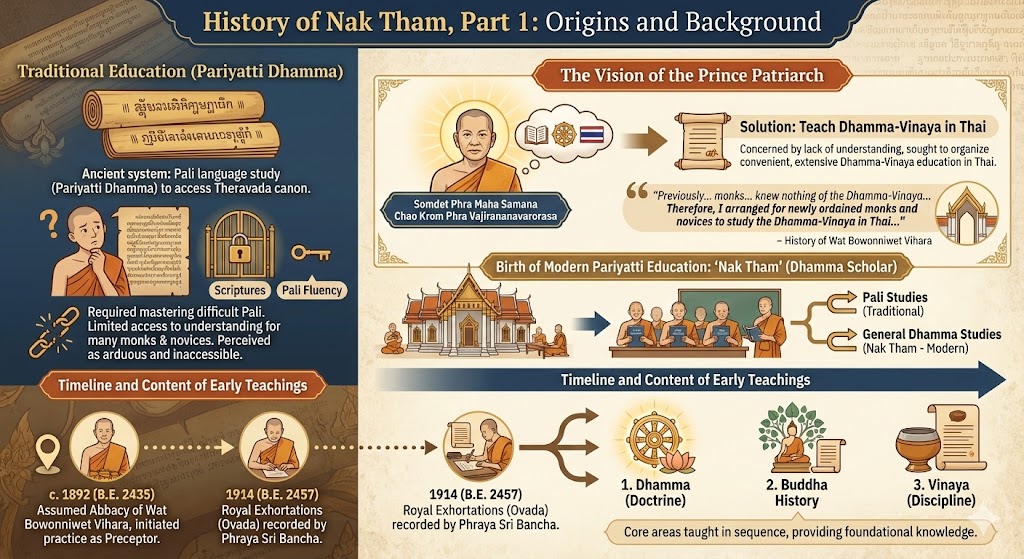
การศึกษาของภิกษุสามเณรในประเทศไทยแต่โบราณมา คือการศึกษาภาษาบาลี ที่เรียกว่า การศึกษาพระปริยัติธรรม เป็นการศึกษาพระพุทธศาสนาในภาษาบาลี เพื่อให้รู้ภาษาบาลีสามารถอ่านพระคัมภีร์ของพระพุทธศาสนาได้โดยสะดวก เพราะคัมภีร์ของพระพุทธศาสนาฝ่ายเถรวาทดังที่นับถืออยู่ในประเทศไทยนั้น ล้วนจารึกไว้ด้วยภาษาบาลี
ฉะนั้น ผู้ที่ประสงค์จะรู้พระธรรมคำสอนของพระพุทธศาสนาให้แตกฉานจึงจำต้องศึกษาภาษาบาลีให้รู้แตกฉาน ซึ่งนับว่าเป็นเรื่องที่ยากไม่น้อยสำหรับภิกษุสามเณรทั่วไป ด้วยเหตุนี้ ผู้ที่ไม่รู้ภาษาบาลีจึงพลอยไม่ค่อยรู้เรื่องคำสอนของพระพุทธศาสนาอย่างแจ้งชัดตามไปด้วย ทั้งเป็นเหตุให้ภิกษุสามเณรทั่วไปไม่ค่อยเอาใจใส่ที่จะศึกษาหาความรู้เกี่ยวกับคำสอนของพระพุทธศาสนาด้วย เพราะเรียนยาก รู้ยาก
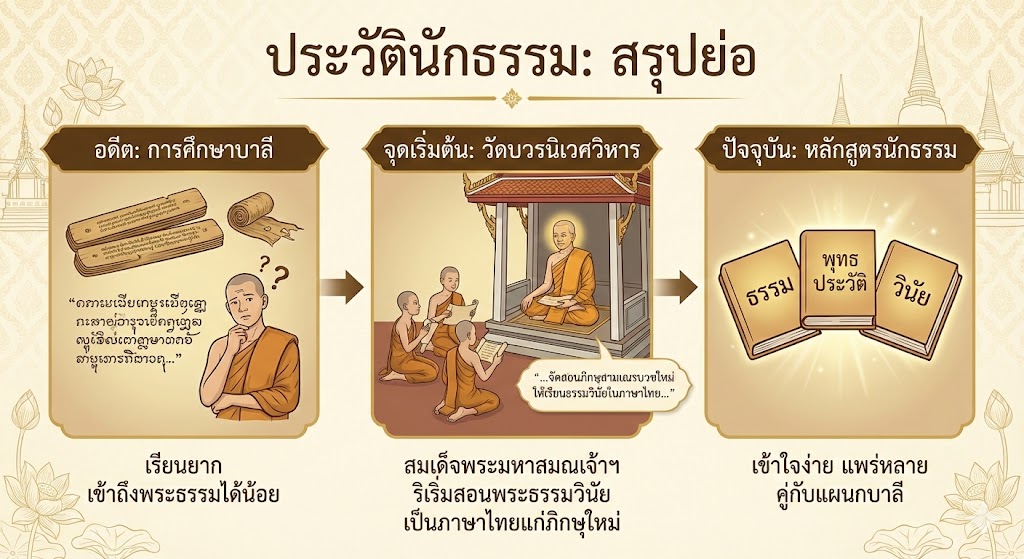
สมเด็จพระมหาสมณเจ้า กรมพระยาวชิรญาณวโรรส แต่ครั้งยังทรงดำรงพระอิสริยยศเป็นกรมหมื่น ทรงพระปริวิตกถึงความเป็นไปของภิกษุสามเณรดังกล่าวมาข้างต้น จึงได้ทรงพระดำริหาทางจัดการเล่าเรียนเพื่อให้ภิกษุสามเณรได้เรียนรู้พระธรรมวินัยได้สะดวกและกว้างขวางยิ่งขึ้น โดยได้ทรงริเริ่มสอนพระธรรมวินัยแก่ภิกษุสามเณรบวชใหม่เป็นภาษาไทยขึ้นที่วัดบวรนิเวศวิหารเป็นครั้งแรก ในฐานที่ทรงเป็นพระอุปัชฌายาจารย์ ดังที่ทรงอธิบายไว้ในตำนานวัดบวรนิเวศวิหารว่า
“แต่ก่อนมา ภิกษุบวชได้กี่พรรษาก็ตาม ไม่สนใจแล้วไม่รู้ธรรมวินัยเลย นอกจากที่เคยปฏิบัติ จึงจัดสอนภิกษุสามเณรบวชใหม่ให้เรียนธรรมวินัยในภาษาไทยเป็นการส่วนตัวในหน้าที่แห่งอุปัชฌายาจารย์ก่อน ต่อมาปลูกความนิยมออกไปถึงภิกษุสามเณรเก่าด้วย จนถึงจัดเป็นการเรียนเป็นพื้นวัดขึ้นได้ แลมีวัดธรรมยุตอื่นทำตามแพร่หลายออกไป”
นี้คือจุดเริ่มต้นของการศึกษาพระปริยัติธรรมแบบใหม่ ที่เรียกว่า “นักธรรม” ในเวลาต่อมา หรือเรียกอย่างเป็นทางการว่า พระปริยัติธรรมแผนกธรรม คู่กับพระปริยัติธรรมแผนกบาลี ซึ่งเป็นหลักสูตรการศึกษาของพระสงฆ์ไทยมาแต่โบราณ
สมเด็จพระมหาสมณเจ้า กรมพระยาวชิรญาณวโรรส ได้ทรงริเริ่มการสอนธรรมวินัยในภาษาไทยแก่ภิกษุสามเณรบวชใหม่ดังกล่าวมาข้างต้นขึ้นเมื่อใดไม่ปรากฏหลักฐาน ทรงกล่าวไว้ในตำนานวัดบวรนิเวศวิหาร แต่เพียงว่า การสอนธรรมวินัยในภาษาไทยแก่ภิกษุสามเณรบวชใหม่ดังกล่าว เป็นการที่ได้ทรงจัดขึ้นเมื่อทรงครองวัดบวรนิเวศวิหาร สืบต่อจากสมเด็จพระมหาสมณเจ้า กรมพระยาปวเรศวริยาลงกรณ์ (นับแต่ พ.ศ. ๒๔๓๕ เป็นต้นมา) จึงสันนิษฐานว่า คงทรงริเริ่มขึ้นแต่เมื่อแรกทรงครองวัดบวรนิเวศวิหาร ในฐานที่ทรงเป็นพระอุปัชฌาย์ซึ่งจะต้องให้การอบรมสั่งสอนสัทธิวิหาริกและภิกษุสามเณรที่อยู่ในความปกครอง
ลักษณะการสอนธรรมวินัยในภาษาไทยที่สมเด็จพระมหาสมณเจ้าฯ ทรงสอนภิกษุสามเณรบวชใหม่นั้น ทรงสอนอย่างไร สังเกตจากสำเนาพระโอวาท ที่ประทานแก่นวกภิกษุปี พ.ศ. ๒๔๕๗ ที่พระยาศรีบัญชา (ทวน ธรรมาชีวะ) ซึ่งเป็นนวกภิกษุในปีนั้น ได้จดบันทึกไว้เป็นรายวันตามที่ทรงสอนปรากฏว่า เนื้อหาของพระโอวาทประกอบด้วยพระอธิบายเรื่องธรรม เรื่องพุทธประวัติ และเรื่องวินัย โดยทรงสอนไปตามลำดับ คือ ธรรม พุทธประวัติ และวินัย
The Origins of “Nak Tham”: A Revolution in Thai Monastic Education
The Traditional Pali Foundation
Since ancient times, the education of Buddhist monks and novices in Thailand was centered on the study of the Pali language, known as “Pariyatti Dhamma.” This system focused on mastering Pali to read and interpret the Buddhist scriptures. This was essential because the Theravada Buddhist scriptures revered in Thailand are all inscribed in the Pali language.
Consequently, anyone wishing to gain a profound understanding of the Buddha’s teachings was required to become proficient in Pali. This was a significant challenge for the general population of monks and novices. As a result, those unable to master the language often lacked a clear understanding of Buddhist doctrine. Furthermore, the difficulty of the subject caused many monks to neglect the study of the Dhamma altogether.
The Vision of Prince Patriarch Vajirayanavarorasa
Prince Patriarch Vajirayanavarorasa (while holding the title of Prince Krom Muen) became deeply concerned about this state of affairs within the Sangha. He sought a way to reorganize education so that monks and novices could learn the Dhamma and Vinaya (Discipline) more conveniently and extensively.
He initiated a new method by teaching the Dhamma and Vinaya to newly ordained monks in the Thai language for the first time at Wat Bowonniwet Vihara, in his capacity as their Preceptor (Upajjhaya). As recorded in the History of Wat Bowonniwet Vihara, he explained:
“Previously, monks, regardless of how many rains retreats they had observed, paid no attention to and had no knowledge of the Dhamma and Vinaya, aside from what they practiced by habit. Therefore, I arranged for newly ordained monks and novices to learn the Dhamma and Vinaya in the Thai language privately, as part of the Preceptor’s duty. Later, this popularity spread to older monks and novices as well, until it was organized as a temple-wide educational system, and other Thammayut temples followed suit.”
This was the genesis of the modern monastic education system known today as “Nak Tham” (Dhamma Scholar), or officially as “Pariyatti Dhamma, Dhamma Section,” which stands alongside the traditional “Pali Section” that has existed in the Thai Sangha since ancient times.
The Establishment of the Curriculum
There is no exact record of when Prince Patriarch Vajirayanavarorasa began teaching Dhamma and Vinaya in Thai to new monks. However, the History of Wat Bowonniwet Vihara mentions that he organized this after becoming the Abbot of Wat Bowonniwet Vihara, succeeding Prince Patriarch Pavares Variyalongkorn (from B.E. 2435 / 1892 C.E. onwards). It is presumed that he initiated this practice early in his abbacy to fulfill his duty as a Preceptor responsible for training his Saddhiviharika (disciples) and the monks under his care.
Regarding the content and method of his teaching, records from the diary of Phraya Sri Bancha (Thuan Thammachiwa), who was a newly ordained monk in B.E. 2457 (1914 C.E.), reveal the structure of the Prince Patriarch’s daily sermons. The instruction was systematically divided into three key areas:
- Dhamma (Doctrine)
- Buddha History (The Life of the Buddha)
- Vinaya (Monastic Discipline)