Overhauling “Parian Tham”: Bridging Dhamma Studies and Pali to Cultivate True Buddhist Scholars
Introduction: The Era of Rote Translation
In the past, Thai monastic education was akin to a journey in a single direction: the translation of the Pali language. The image of monks and novices chanting from palm-leaf manuscripts, diligently deciphering complex grammatical terms, was a familiar sight for generations. However, beneath this linguistic expertise lay a significant weakness: a lack of understanding of the “Core Dhamma” (the essence of the teachings).
In that era, a “Maha Parian” (Pali scholar) might have been fluent in translating commentaries, but when asked about practical Dhamma principles or the deeper meaning of the Buddha’s words for daily application, many were unable to answer. The instruction focused solely on translating “word-for-word” rather than comprehending the content. This was the major challenge that tested the vision of Somdet Phra Maha Samana Chao Krom Phraya Vajirananavarorasa (The Supreme Patriarch of Thailand).
Merging Two Streams: When Language Meets Wisdom
After successfully establishing the “Nak Tham” curriculum (Dhamma studies in the Thai language), the Prince Patriarch realized a potential disparity. If Pali education continued to be separated from Dhamma studies, future “Parian” monks (Pali experts) might end up having less understanding of the actual doctrine than “Nak Tham” students. This would create an imbalance within the Sangha.
In 1912 (2455 BE), the Prince Patriarch decided to “overhaul” the entire education system. He employed a strategic approach to “link the two divisions of Phra Pariyatti Tham (Dhamma studies) together.” He established a crucial rule: to advance in ecclesiastical rank as a Parian scholar, one could no longer rely solely on translation skills.
The New Iron Rule: Passing “Nak Tham” to Become “Parian”
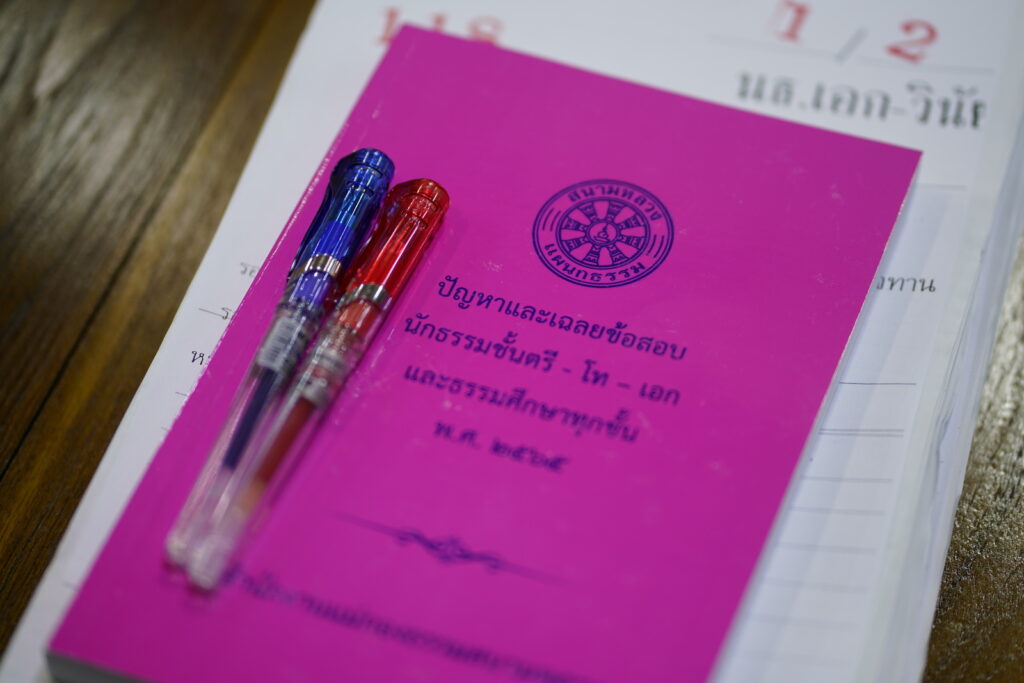
The Prince Patriarch restructured the system by mandating that “Anyone wishing to take the exam for Parian Dhamma Level 3 (P.D. 3) must first pass the Nak Tham Grade 3 (Tri) exam.”
This rule effectively compelled monks and novices in the Pali stream to seriously study Dhamma principles, the Monastic Discipline (Vinaya), and the History of Buddhism alongside their grammatical memorization. This strategy was not limited to the entry-level but formed a foundational ladder linking the two systems:
- To take the Parian Dhamma Level 3 exam, one must pass Nak Tham Grade 3 (Tri).
- To take the Parian Dhamma Levels 4, 5, and 6 exams, one must pass Nak Tham Grade 2 (Tho).
- To take the Parian Dhamma Levels 7, 8, and 9 exams, one must pass Nak Tham Grade 1 (Ek).
The Birth of “Parian Tham”
The result of this reform transformed the status of the “Maha Parian.” From being monks who knew only the language, they evolved into individuals well-versed in both the language and the doctrine. This integration gave rise to the new academic designation: “Parian Tham” (Pali + Dhamma).
Since then, the Thai Sangha has moved beyond producing mere “translators” who recite texts like parrots. Instead, it began cultivating “Scholars” capable of unlocking the Tripitaka using Pali and extracting the essence of the Dhamma to teach the public deeply and accurately. This “overhaul” was not merely a regulatory amendment; it was a fulfillment of the spirit of learning, allowing the Dhamma and Vinaya to truly take root in the hearts of the heirs of the religion.
Reference: “The Development of Siam” (Memorial for the Celebration of the Honor of Somdet Phra Maha Samana Chao Krom Phraya Vajirananavarorasa)